Saphenion®: Die Radikalität der Krampfadertherapie

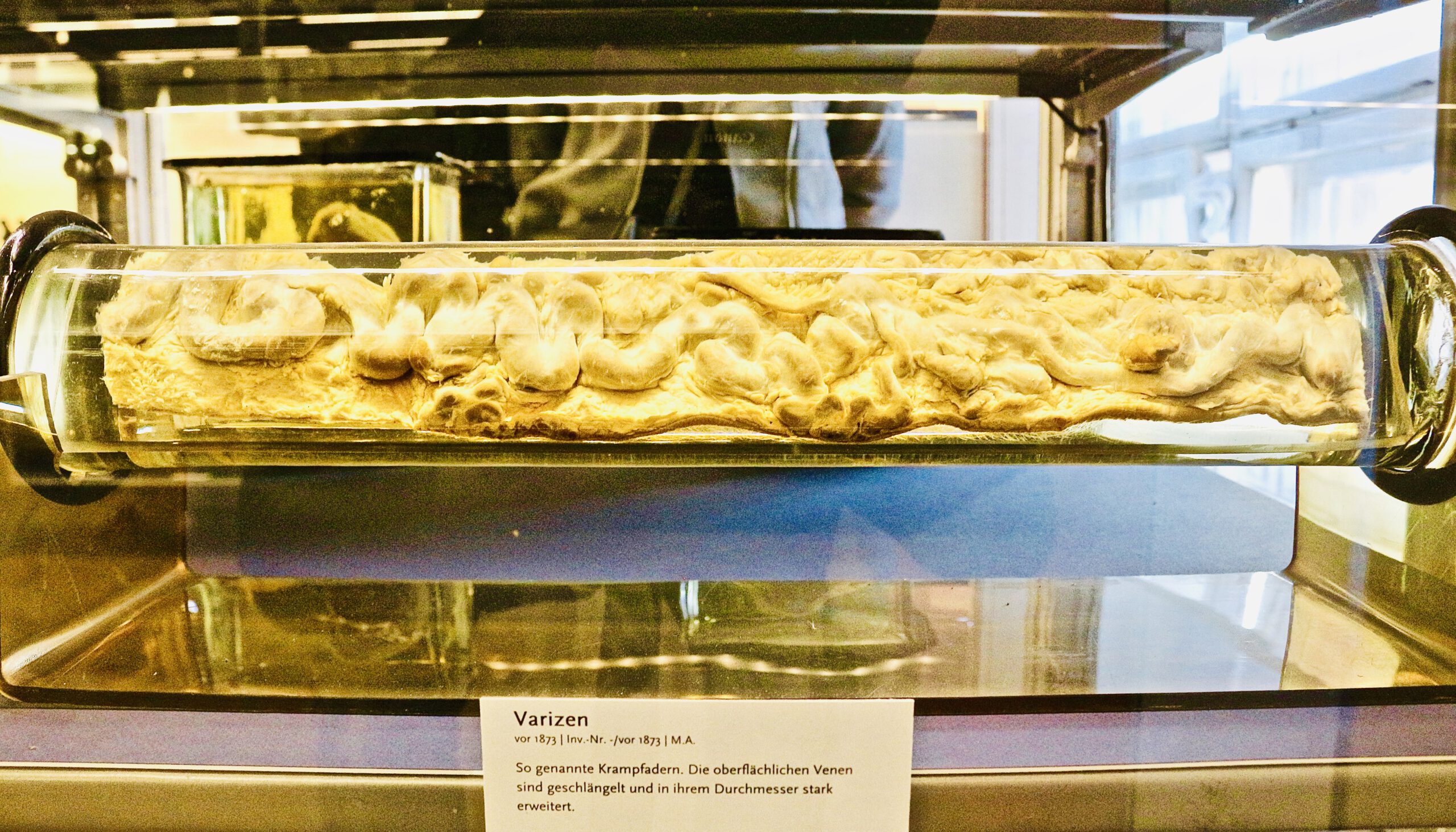
Saphenion®: Die Radikalität der Krampfadertherapie – Der radikale operative Umgang mit der Vena saphena magna und Vena saphena parva und die damit verbundenen Komplikationen führten bereits schon in der ersten Hälfte des 20. Jahrhunderts zu einer Zurückhaltung und lediglich eingeschränkten Verbreitung des Stripping – Verfahrens in Deutschland.

Saphenion®: The radical nature of varicose vein therapy – The radical surgical treatment of the great saphenous vein and small saphenous vein and the associated complications led to reluctance and only limited use of the stripping procedure in Germany as early as the first half of the 20th century.

Saphenion®: Therapie Krampfaderrezidiv mit Venenkleber?

Saphenion®: Therapie Krampfaderrezidiv mit Venenkleber? Mt VenaSeal konnten bisher in 527 Fällen ektatische Krampfadern erfolgreich verschlossen werden. Neben dem standardisierten Protokoll ist ein dosierter asymmetrischer Druck und eine Abgabe eines Klebertropfens zweimalig in 1 cm Abstand erfolgversprechend. Die bisher weitverbreitete Meinung, dass stark erweiterte Krampfadern > 1,2 cm Durchmesser nicht durch Venenkleber behandelt werden sollten, bedarf somit einer fachlichen Revision.

Saphenion®: Treatment of varicose vein recurrence with vein glue – VenaSeal has successfully closed ectatic varicose veins in 527 cases to date. In addition to the standardized protocol, a dosed asymmetrical pressure and a drop of adhesive applied twice at 1 cm intervals is promising. The previously widespread opinion that severely dilated varicose veins > 1.2 cm in d

Saphenion®: Venenkleber Unterschenkelkrampfadern 1. Wahl

Aktuell haben wir bis zum 3. 06. 2026 die Vena saphena parva in 1460 Fällen mit dem VenaSeal® – System therapiert und in 120 Fällen zusätzlich und simultan die Vena femoropoplitea (Verlängerung der Saphena parva zum Oberschenkel hin) mittels Venenkleber verschlossen.

Up to june, 3th., 2026, we have treated the SSV in 1460 cases and in 120 cases additionally and simultaneously closed the femoropopliteal vein (extension of the saphenous parva to the thigh) with vein glue.

Saphenion®: Mikroschaum bei Rumpfkrampfadern

Krampfadern am Rumpf sind in der täglichen Venenpraxis eher eine Ausnahme. Ab und an sehen wir Krampfadern an den Bauchdecken oder im Decolletè.

Varicose veins on the torso are rather rare in everyday vein practice. Occasionally, we see varicose veins on the abdominal wall or in the décolletage area.

Saphenion®: Venenkleber zur Therapie der Krampfaderthrombose?

Saphenion®: Venenkleber zur Therapie der Krampfaderthrombose? Die Thrombose im Bereich der oberflächlichen Stammvenen und Hautvenen (Oberflächliche Venenthrombose – OVT; Thrombophlebitis) ist keine seltene Komplikation, Sie bedarf einer medikamentösen oder auch operativen Therapie, wenn die Thrombose in Richtung tiefe Venen wächst. Diese Situation ist insbesondere bei Thrombosen der Vena saphena magna und Vena saphena parva sowie anderer Stammvenen eklatant und führt in ca. 20% der Fälle auch zur Thrombose der tiefen Venen.

Saphenion® – vein glue for the therapy of varicose vein thrombosis? The thrombosis in the area of ​​the superficial truncal veins and cutaneous veins (superficial venous thrombosis – OVT; thrombophlebitis) is not a rare complication; it requires drug or surgical therapy if the thrombosis grows in the direction of deep veins. This situation is particularly striking in the case of thromboses of the great saphenous vein GSV and small saphenous vein SSV as well as other saphenous veins and leads to deep vein thrombosis in around 20% of cases.

Saphenion®: Rudern bei Krampfadern

Das Fitnesstraining ist in vielen Punkten eine grosse Belastung für das Beinvenensytem. Das Stemmen von Gewichten, ob auf der Stemmbank oder auch beim Gewichtheben, stellt eine enorme Druckbelastung für alle Beinvenen dar. Neben dem erheblichen Druck, der sich durch die Anspannung der Bauch – und Beckenmuskulatur in der Bauchhöhle aufbaut, kommt der hydrostatische Druck dazu.

In many ways, fitness training places a great strain on the leg vein system. Lifting weights, whether on a weight bench or in weightlifting, puts enormous pressure on all the leg veins. In addition to the considerable pressure that builds up in the abdominal cavity due to the tension in the abdominal and pelvic muscles, there is also hydrostatic pressure.