Saphenion®: Venenkleber bei aneurysmatischen Krampfadern

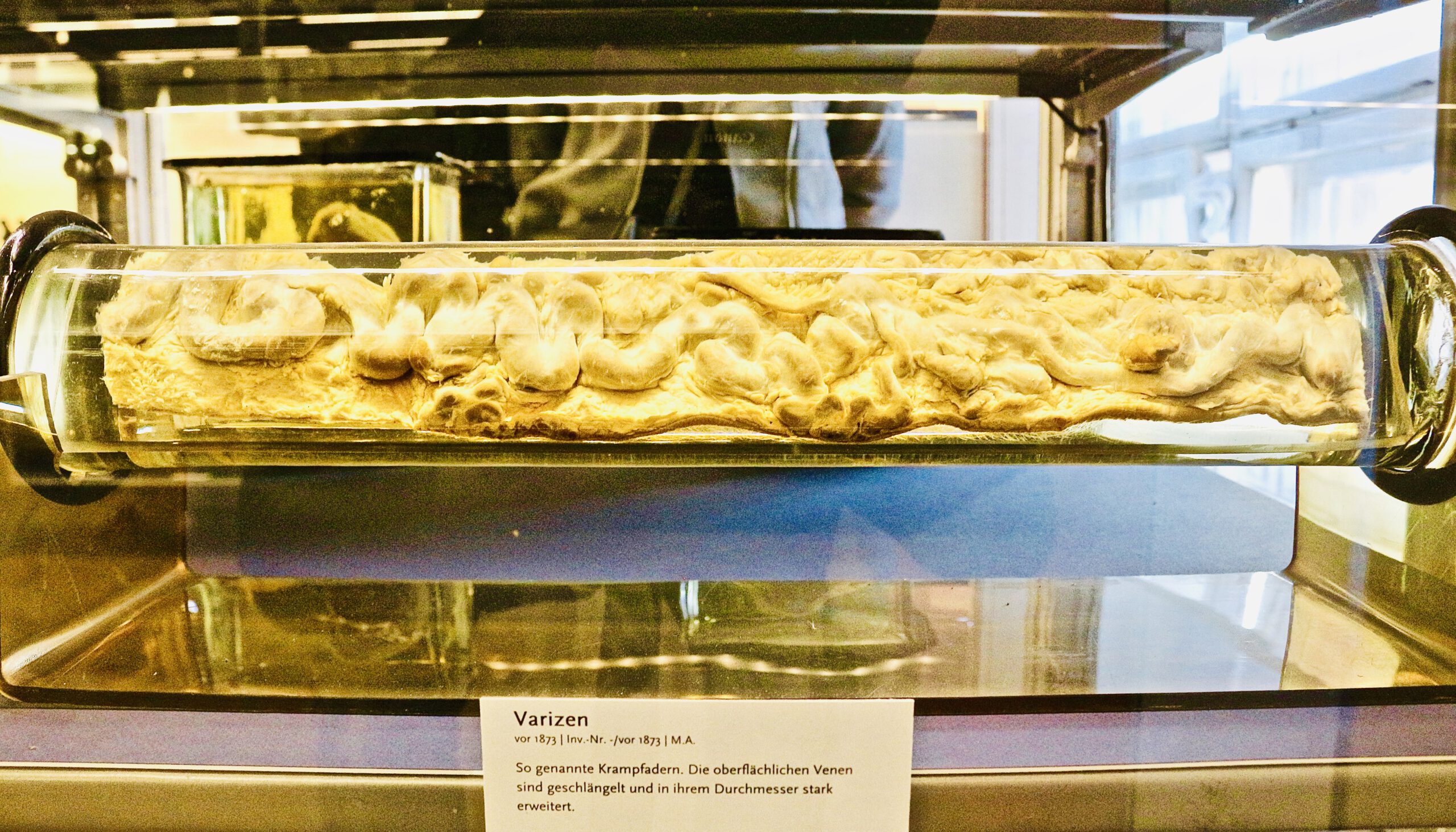
Saphenion®: Venenkleber bei aneurysmatischen Krampfadern – Der Venenkleber Venaseal hat die uneingeschränkte Zulassung für die Therapie von Stammkrampfadern. Unabhängig davon kann der Kleber auch erfolgreich bei der Therapie von Seitenastkrampfadern, Perforansvenen und Aneurysmata der Venen mit Erfolg im Rahmen des „off label use“ eingesetzt werden.

Super glue VenaSeal® has the approval for therapy of greater truncal veins. Independently of this super glue can be used also in the ablation of side branches, perforator veins and aneurysmatic veins. this is a successful „off label use“.

Saphenion®: Venenkleber zur Therapie der Krampfaderthrombose?

Saphenion®: Venenkleber zur Therapie der Krampfaderthrombose? Die Thrombose im Bereich der oberflächlichen Stammvenen und Hautvenen (Oberflächliche Venenthrombose – OVT; Thrombophlebitis) ist keine seltene Komplikation, Sie bedarf einer medikamentösen oder auch operativen Therapie, wenn die Thrombose in Richtung tiefe Venen wächst. Diese Situation ist insbesondere bei Thrombosen der Vena saphena magna und Vena saphena parva sowie anderer Stammvenen eklatant und führt in ca. 20% der Fälle auch zur Thrombose der tiefen Venen.

Saphenion® – vein glue for the therapy of varicose vein thrombosis? The thrombosis in the area of ​​the superficial truncal veins and cutaneous veins (superficial venous thrombosis – OVT; thrombophlebitis) is not a rare complication; it requires drug or surgical therapy if the thrombosis grows in the direction of deep veins. This situation is particularly striking in the case of thromboses of the great saphenous vein GSV and small saphenous vein SSV as well as other saphenous veins and leads to deep vein thrombosis in around 20% of cases.

Saphenion®: Unser Gang zum Bundesgerichtshof

Saphenion®: Unser Gang zum Bundesgerichtshof – was ist ein höchstrichterliches Grundsatzurteil wert, wenn es nicht umgesetzt wird?

Saphenion®: Our appeal to the Federal Court of Justice – what is a landmark ruling worth if it is not implemented?

Saphenion®: Prophylaxe Venenthrombose mit Aspirin sinnvoll?

Saphenion®: Prophylaxe Venenthrombose mit Aspirin sinnvoll? Ist das Medikament Aspirin (ASS) zur venösen Thromboseprophylaxe oder zur Vermeidung von Arterienverschlüssen 1. Wahl? Schon seit 40 Jahren wird die Bedeutung des Aspirins zur venösen Thromboseprophylaxe intensiv diskutiert. Es wird in den USA  viel empfohlen und ist in Supermärkten frei verkäuflich. In den europäischen Ländern hat Aspirin als Medikament zur Thromboseprophylaxe keine Bedeutung mehr. 
Saphenion®: Is aspirin useful for preventing venous thrombosis? Is aspirin (ASA) the drug of choice for preventing venous thrombosis or arterial occlusion? The importance of aspirin for venous thrombosis prophylaxis has been the subject of intense debate for 40 years. It is widely recommended in the USA and is freely available in supermarkets. In European countries, aspirin is no longer considered a significant medication for thrombosis prophylaxis.

Saphenion®: Kathetergestützte Therapie Baker-Zyste

Die Behandlung der Baker-Zyste kann entweder konservativ oder operativ erfolgen. Die konservative Therapie schließt eine antientzündliche medikamentöse Therapie (Ibuprofen, Diclofenac) und auch eine Punktion der Zyste ein. Bei der operativen Therapie wird in der Regel die gesamte Zyste über einen recht großen Hautschnitt in der Kniekehle freigelegt und an ihrer Wurzel (Kanal ins Kniegelenk) unterbunden und dann abgetrennt. Auf Grund der Radikalität des Eingriffs muss man nach der Operation mit den üblichen Komplikationen chirurgischer Eingriffe in sensiblen Regionen (Kniekehle) rechnen.
Die kathetergestützte bipolare Thermoablation (RFITT) der Baker – Zyste ist ein weltweit in nur wenigen Zentren im klinischen Einsatz befindliches Verfahren zur endozystischen minimalinvasiven Thermoablation von Kniegelenkzysten. Es wurde 2010 von SAPHENION in den klinischen Alltag eingeführt.

Baker’s cyst can be treated either conservatively or surgically. Conservative treatment includes anti-inflammatory medication (ibuprofen, diclofenac) and a puncture of the cyst. In surgical treatment, the entire cyst is usually exposed via a fairly large incision in the hollow of the knee and its root (canal into the knee joint) is cut off and then removed. Due to the radical nature of the procedure, the usual complications of surgical procedures in sensitive regions (popliteal fossa) must be expected after the operation.
Catheter-assisted bipolar thermal ablation (RFITT) of the Baker cyst is a procedure for endocystic minimally invasive thermal ablation of knee joint cysts that is in clinical use in only a few centers worldwide. It was introduced into everyday clinical practice by SAPHENION in 2010.

Saphenion®: Das Risiko venöser Durchblutungsstörungen

Venöse Durchblutungsstörungen können ebenso, wie das sog. Raucherbein, zu erheblichen Beeinträchtigung  und sogar drastischen Veränderungen im individuellen Lebensablauf bis hin zum Verlust des Beines oder durch eine Lungenembolie auch zum Tod führen.

Venous circulatory disorders, just like the so-called smoker’s leg, can lead to considerable impairment and even drastic changes in the individual’s life course, up to the loss of the leg or even death due to a pulmonary embolism.